
"coffee farming decline"
1000 article(s) found

Brazilian production decline trading companies bet on Chinese coffee beans
According to the Wall Street Journal website on October 29th, commodities trading company EDF Man Holdings Ltd. Volcafe, a subsidiary, said on the 28th that it had signed an agreement with China Simao Arabica Star Coffee Co., Ltd. (Simao Arabicasm Coffee Company) to set up a joint venture to buy and sell coffee beans from Yunnan. According to the report, China

Tanzania coffee boutique coffee beans introduce flavor and taste manors in producing areas
Wheat: the national average annual output of wheat is 70, 000 tons, and the largest wheat production unit is the HANNANG wheat complex, which is composed of several farms with a total planting area of 4000 hectares. These farms are located in the Hannang district of Arusha and are all autonomous subsidiaries of NAFCO. In the 1970s, NAFCO developed and operated these with the help of the Canadian International Development Agency (CIDA).

Introduction to Papua New Guinea, which is varied, rich in taste and full of particles.
After 1991, the quality gradually declined, and then the European market was lost.

Introduction of coffee beans in Papua New Guinea characteristics of coffee beans in Papua New Guinea
The legendary background of modern coffee. In PapuaNewGuinea, about 75 per cent of coffee products come from small local farmers

The characteristics of Papua New Guinea Coffee beans the price of fine coffee in Papua New Guinea
The legendary background of modern coffee. In PapuaNewGuinea, about 75 per cent of coffee products come from small local farmers

Introduction to Paradise Bird Manor in Papua New Guinea
The frost in 1975 destroyed most coffee crops in Brazil, but stimulated the development of coffee in Papua New Guinea. The Government has implemented a scheme to finance the creation of about 20 hectares of coffee plantations in rural or collective land ownership. This measure has indeed increased the penetration of coffee in the local economy, with annual production reaching 1 million bags by 1990. However, almost
Coffee producing area-Papua New Guinea
The legendary background of modern coffee
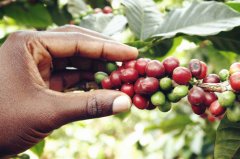
The legendary background of modern coffee in Papua New Guinea
The legendary background of modern coffee. In PapuaNewGuinea, about 75 per cent of coffee products come from small local farmers

Introduction to washed Arabica beans and coffee beans in Papua New Guinea
The coffee beans of Papua New Guinea are processed washed Arabica beans with a taste similar to the bright notes of Central and South America, with obvious sour aromas, sometimes orange, flower and fruit, slightly spicy and chocolate, and long-lasting sweet aromas of caramel. Flavor reference: refreshing herbaceous and floral aromas, tenderness of Central and South American beans, slightly sour, fruity, sticky

Introduction to the quality and taste of Columbia Hope Manor Coffee Flavor description and Grinding treatment
Hope that the manor is different from other manors, with doctoral botanists, three professional cup surveyors, 100 full-time employees, and currently manages a manor under its jurisdiction. The estate is owned by the Herrera brothers. In fact, the grandfather of the Herrera brothers, who ran a coffee farm in the Trujillo district of Colombia, gradually declined, and the two brothers left Colombia. But they didn't give up and go home.

What is the difference between Bolivian coffee and Bolivian coffee?
Professional coffee knowledge exchange More coffee bean information Please pay attention to Coffee Workshop (Weixin Official Accounts cafe_style) Front Street-Bolivia Coffee Introduction Bolivia is located in South America and is surrounded by Brazil, Peru, Argentina, Paraguay and Chile. Bolivia is the poorest country in South America. Due to its backward basic conditions, coffee processing and delivery are not timely.

Introduction to the flavor and taste of boutique coffee beans in Hope Manor
China Coffee Network hopes that the manor is different from other manors, with doctoral botanists, three professional cup surveyors, 100 full-time employees, and currently manages a manor under its jurisdiction. The estate is owned by the Herrera brothers. In fact, the grandfather of the Herrera brothers, who ran a coffee farm in the Trujillo district of Colombia, gradually declined, and the two brothers left Colombia. But they
Boutique coffee beans produced in Papua New Guinea
In Papua New Guinea, about 75 per cent of coffee products come from small local farmers

The traditional coffee producing area began to take the boutique coffee route. Puerto Rico was once the main coffee producing area.
Puerto Rico used to be a major coffee producing area more than a century ago, but coffee production here has been declining for nearly half a century, and now it is only about 10 million pounds a year, a drop in the bucket compared with the past. the acreage of coffee fell from nearly 200000 acres in the 1960s to about 40, 000 acres in 2010. At the same time, there are even fewer coffee exports. Farm reduction
Coffee beans Oceania Papua New Guinea
The legendary background of modern coffee. In Papua New Guinea, about 75 per cent of coffee products come from small local farmers

Introduction to the treatment methods of Kenyan boutique coffee
Don't underestimate the small farmers in Kenya, they are just like ants, and their overall production capacity is higher than that of large farms, about six to four, which is quite rare in bean-producing countries. Kenyan coffee is widely appreciated by connoisseurs, thanks in large part to small farmers guarding the foothills and producing high-quality coffee. In addition, Kenya beans must have a strict grading system, according to the size of the coffee beans taken out by the washing plant.
Don't underestimate Kenyan coffee.
Kenya lies to the north of Ethiopia, the origin of Arabica coffee trees, but it was not until the early 20th century that it was engaged in coffee cultivation. In the 19th century, missionaries introduced Arabica trees from Yemen, but did not plant them in large quantities. It was not until 1893, when Brazil's ancient bourbon seeds were introduced, that coffee was cultivated on a large scale. That is to say, the current Kenyan coffee has Brazilian ancestry.
Papua New Guinea, Papua New Guinea
The legendary background of modern coffee. In Papua New Guinea, about 75 percent of coffee production comes from small-scale, local farmers

Costa Rican Coffee Manor Hope Manor introduces the western valleys of the central mountains
Hope that the manor is different from other manors, with doctoral botanists, three professional cup surveyors, 100 full-time employees, and currently manages a manor under its jurisdiction. The estate is owned by the Herrera brothers. In fact, the grandfather of the Herrera brothers, who ran a coffee farm in the Trujillo district of Colombia, gradually declined, and the two brothers left Colombia. But they didn't give up and go home.

Boutique Coffee Papua New Guinea Coffee Manor
The legendary background of modern coffee. In PapuaNewGuinea, about 75 per cent of coffee products come from small local farmers